_6qQGT7RyIS2hBzkugHCoc.png?width=2048&quality=80&format=auto)
WTO Panel Strikes Down Inflation Reduction Act Domestic Content Tax Credits (DS623)
The WTO panel in US — IRA (China) (DS623) found domestic-content tax credits inconsistent with GATT, TRIMs, and SCM disciplines and rejected the United States’ GATT Article XX(a) public morals defense.
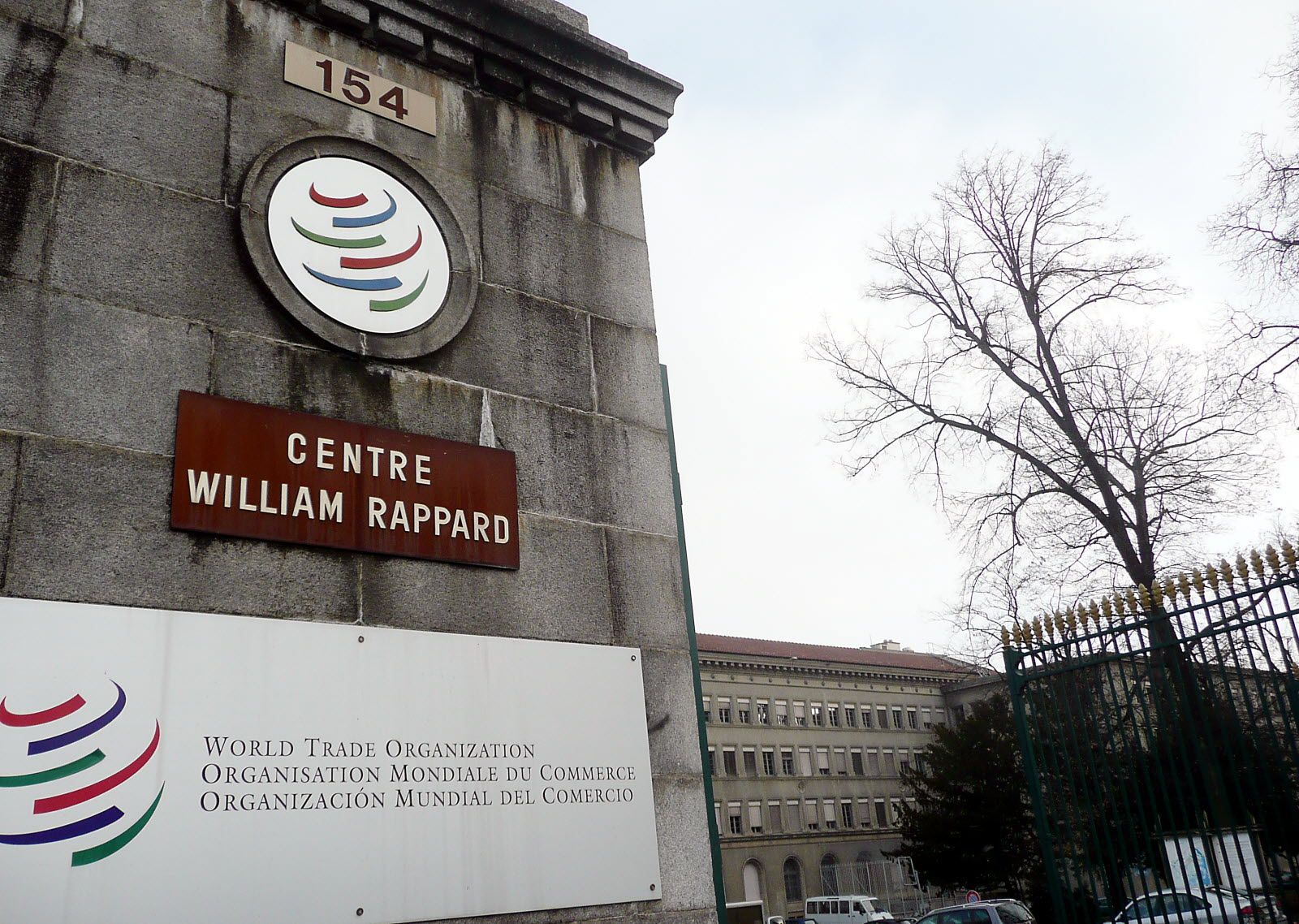
On 30 January 2026, the WTO panel circulated its report in United States — Certain Tax Credits Under the Inflation Reduction Act (DS623), a dispute brought by China challenging domestic content requirements in the US Inflation Reduction Act's clean energy tax incentives. The panel found that the Investment Tax Credit (ITC) and Production Tax Credit (PTC) Domestic Content Bonus Credits violate GATT Article III:4, the TRIMs Agreement, and SCM Agreement Article 3.1(b). Critically, the panel rejected the United States' defense under Article XX(a) of the GATT 1994, which permits measures "necessary to protect public morals". This marks the first WTO panel to extensively analyze—and reject—the argument that domestic content subsidies can be justified as protecting public morals against allegedly objectionable foreign conduct.
The report has immediate implications for governments designing climate and industrial policy measures, companies operating in clean energy sectors, and the broader intersection of trade rules with security, environmental, and values-based concerns. While the panel report remains formally unadopted pending the possibility of appeal (the Appellate Body currently being non-functional), its reasoning is likely to influence future disputes involving domestic content requirements and the scope of the public morals exception.
The Inflation Reduction Act, signed into law on 16 August 2022, amended the US Internal Revenue Code to create and modify tax credits for clean vehicle adoption and renewable energy production and investment. China's challenge focused on the Investment Tax Credits and Production Tax Credits for clean electricity facilities, specifically the "Domestic Content Bonus Credits" that increase the value of these credits when domestic content requirements are satisfied.
The panel examined four credits: the pre-existing ITC under 26 USC § 48, a new ITC under § 48E, the pre-existing PTC under § 45, and a new PTC under § 45Y. The base credit amount is generally 6% of investment costs for ITCs and 0.3 cents per kilowatt-hour for PTCs. These base amounts can be increased by a factor of five if prevailing wage and apprenticeship requirements are met.
The measures at issue provide an additional increase—the "Domestic Content Bonus Credit"—of 10 percentage points for ITCs or 10% for PTCs when two domestic content requirements are satisfied:
The Steel and Iron Requirement: 100% of the steel or iron used in the structure or structural components of the facility must be produced in the United States. "Produced in the United States" means that all manufacturing processes, from initial melting and mixing through final shaping, occurred in the United States.
The Manufactured Products Requirement: A specified percentage of manufactured products (other than steel and iron) must be mined, produced, or manufactured in the United States. The required percentage escalates over time: 40% for facilities beginning construction before 2025, 45% for 2025, 50% for 2026, and 55% for 2027 and thereafter. The percentage is calculated based on the total cost of manufactured products.
The subsidies are delivered in three forms: (1) as a tax credit that reduces the taxpayer's income tax liability (the Investor/Producer Credit); (2) as a direct payment from the government equal to the credit amount (Elective Payment); or (3) as a transferable credit that can be sold to unrelated parties, who then claim the credit against their own tax liability (Assignment Credit).
China requested consultations on 26 March 2024, which were held on 7 May 2024. China requested panel establishment on 15 July 2024, and the DSB established the panel on 23 September 2024. The panel was composed of Ms. Athalia Lesiba Molokomme (Chairperson), Ms. Elaine Feldman, and Ms. Amina Mohamed. Twenty-three WTO Members participated as third parties.
China originally also challenged the Clean Vehicle Tax Credit, which imposed domestic content requirements for battery components and critical minerals. However, the United States terminated this credit effective 30 September 2025 through the One Big Beautiful Bill Act (OBBBA). In light of this termination, China withdrew its claims against the Clean Vehicle Tax Credit on 3 October 2025, and the panel's findings are limited to the ITC/PTC Domestic Content Bonus Credits.
The panel addressed China's claims in three stages, followed by the United States' affirmative defense.
China claimed that the ITC/PTC Domestic Content Bonus Credits are inconsistent with Article III:4 of the GATT 1994, which requires that imported products "be accorded treatment no less favourable than that accorded to like products of national origin in respect of all laws, regulations and requirements affecting their internal sale, offering for sale, purchase, transportation, distribution or use".
The panel applied the three-element test established in prior case law: (1) the imported and domestic products must be "like products"; (2) the measure must be a law, regulation, or requirement "affecting" their internal sale, offering for sale, purchase, transportation, distribution, or use; and (3) the imported products must be accorded "treatment no less favourable" than like domestic products.
The panel found all three elements satisfied. First, because the eligibility criteria for the bonus credit distinguish exclusively on the basis of the origin of steel, iron, and manufactured products, the panel considered that the parties had properly proceeded on the presumption that the steel, iron, and manufactured products at issue are "like products" within the meaning of Article III:4. Second, the domestic content requirements constitute "requirements" within the meaning of Article III:4 because they are conditions that must be met to obtain the tax advantage. Such requirements plainly "affect" the purchase or use of products. Third, the measures accord less favorable treatment to imported products because they create an incentive for purchasers to buy domestic products in preference to imported products, thereby modifying the conditions of competition in the marketplace to the detriment of imported products.
Conclusion: The ITC/PTC Domestic Content Bonus Credits are inconsistent with Article III:4 of the GATT 1994.
China claimed that the measures are also inconsistent with Articles 2.1 and 2.2 of the Agreement on Trade-Related Investment Measures. Article 2.1 provides that no Member shall apply any TRIM inconsistent with Article III or Article XI of the GATT 1994. Article 2.2 states that an illustrative list of TRIMs inconsistent with Article III:4 is contained in the Annex to the Agreement.
Paragraph 1 of the Annex identifies TRIMs inconsistent with Article III:4 as including measures "which are mandatory or enforceable under domestic law or under administrative rulings, or compliance with which is necessary to obtain an advantage, and which require: (a) the purchase or use by an enterprise of products of domestic origin or from any domestic source, whether specified in terms of particular products, in terms of volume or value of products, or in terms of a proportion of volume or value of its local production."
The panel found that the ITC/PTC Domestic Content Bonus Credits fall squarely within paragraph 1(a) of the Illustrative List. Compliance with the Steel and Iron Requirement and the Manufactured Products Requirement is "necessary to obtain an advantage," namely the domestic content bonus credit. The requirements "require the purchase or use by an enterprise of products of domestic origin," as they mandate that steel and iron be produced in the United States and that a specified percentage of manufactured products be mined, produced, or manufactured in the United States.
Having found that the measures are TRIMs of the type described in paragraph 1(a) of the Illustrative List, and having already found them inconsistent with Article III:4 of the GATT 1994, the panel concluded that they are inconsistent with Article 2.2 of the TRIMs Agreement. Consequently, the measures are also inconsistent with Article 2.1, which prohibits TRIMs inconsistent with Article III of the GATT 1994.
Conclusion: The ITC/PTC Domestic Content Bonus Credits are inconsistent with Articles 2.1 and 2.2 of the TRIMs Agreement.
China claimed that the measures constitute prohibited subsidies under Article 3.1(b) of the SCM Agreement, which prohibits "subsidies contingent, whether solely or as one of several other conditions, upon the use of domestic over imported goods." Article 3.2 provides that a Member "shall neither grant nor maintain" such subsidies.
To establish a violation, China needed to demonstrate: (1) the existence of a subsidy within the meaning of Article 1 of the SCM Agreement, and (2) that the subsidy is contingent upon the use of domestic over imported goods.
Article 1.1 defines a subsidy as existing when there is a financial contribution by a government that confers a benefit. The panel examined each of the three forms in which the ITC/PTC Domestic Content Bonus Credits are provided:
Investor/Producer Credit: When a taxpayer claims the credit to reduce their income tax liability, the government foregoes revenue that would otherwise be due. This constitutes a financial contribution under Article 1.1(a)(1)(ii) ("government revenue that is otherwise due is foregone or not collected"). The credit confers a benefit because the taxpayer's tax liability is reduced below what it would otherwise be.
Elective Payment: When a taxpayer elects to receive a direct payment from the government in lieu of a tax credit, the government makes a direct transfer of funds under Article 1.1(a)(1)(i). The payment confers a benefit equal to the amount of the payment.
Assignment Credit: When a taxpayer transfers the credit to an unrelated party, and that party claims the credit against their own tax liability, the government foregoes revenue that would otherwise be due from the transferee. This constitutes a financial contribution under Article 1.1(a)(1)(ii), and the transferee receives a benefit equal to the tax reduction.
The panel concluded that all three forms of the ITC/PTC Domestic Content Bonus Credits constitute subsidies within the meaning of Article 1 of the SCM Agreement.
Article 3.1(b) prohibits subsidies "contingent, whether solely or as one of several other conditions, upon the use of domestic over imported goods." "Contingent" means conditional or dependent for its existence on something else. A subsidy is contingent upon the use of domestic over imported goods when it is conditional upon, or granted only on the condition that, the recipient use domestic rather than imported goods.
The panel found that both the Steel and Iron Requirement and the Manufactured Products Requirement establish explicit, de jure contingency. The Steel and Iron Requirement conditions the bonus credit on the use of 100% domestic steel and iron in the structure or structural components of the facility. The Manufactured Products Requirement conditions the bonus credit on a specified percentage (40-55%) of manufactured products being mined, produced, or manufactured in the United States. In both cases, the legal text of the requirements makes eligibility for the bonus credit expressly contingent upon the use of domestic content.
The panel noted that Article 3.1(b) prohibits subsidies contingent on the use of domestic over imported goods "whether solely or as one of several other conditions." Thus, the fact that other conditions (such as the prevailing wage and apprenticeship requirements) must also be met does not prevent a finding that the subsidy is contingent on domestic content.
Conclusion: The ITC/PTC Domestic Content Bonus Credits constitute subsidies contingent upon the use of domestic over imported goods, and are therefore inconsistent with Articles 3.1(b) and 3.2 of the SCM Agreement.
The United States did not contest China's prima facie case on any of the three sets of claims. Instead, it invoked Article XX(a) of the GATT 1994 as an affirmative defense. Article XX provides general exceptions to GATT obligations, stating that nothing in the GATT "shall be construed to prevent the adoption or enforcement by any contracting party of measures: (a) necessary to protect public morals". The chapeau of Article XX further requires that such measures not be "applied in a manner which would constitute a means of arbitrary or unjustifiable discrimination between countries where the same conditions prevail, or a disguised restriction on international trade".
The panel's analysis of the Article XX(a) defense represents the most significant and novel aspect of this dispute. It is the first WTO panel report to extensively examine whether domestic content requirements in subsidies can be justified as protecting public morals, and it provides important clarifications on the legal standard for invoking Article XX(a).
The panel recalled that a respondent invoking Article XX(a) must demonstrate that the challenged measure satisfies a two-step test. First, at the threshold stage, the measure must be one "to protect public morals"—that is, it must be designed or taken for the purpose of protecting public morals. Second, if this threshold is satisfied, the measure must be "necessary" to protect public morals. If both steps are satisfied, the measure must also comply with the requirements of the chapeau of Article XX, which prohibits arbitrary or unjustifiable discrimination and disguised restrictions on trade.
The panel resolved the case at the first step, concluding that the ITC/PTC Domestic Content Bonus Credits are not measures "to protect public morals." Accordingly, it did not proceed to analyze necessity or the chapeau.
The panel devoted substantial attention to clarifying the legal standard for the threshold inquiry. It began by noting that the text of Article XX(a)—"necessary to protect public morals"—indicates that the purpose of the measure must be to protect public morals. Prior Appellate Body reports have interpreted this as requiring that a measure be "designed" or "taken" to protect public morals.
The United States argued that a measure satisfies the threshold if it is "not incapable of" protecting public morals. The panel rejected this characterization as setting the bar too low. In the panel's view, the threshold examination requires an objective assessment of whether the measure was actually designed or taken to pursue the objective of protecting public morals. A measure that is merely "not incapable of" protecting public morals might still fail this test if the evidence does not support a finding that it was in fact designed or taken for that purpose.
The panel emphasized that it is not bound by a respondent's characterization of the objectives of its measures. Rather, the panel must independently assess, based on all the evidence, what objectives the measure is designed to pursue. This assessment should be based on the text of the measure, its legislative history, and its design, structure, and expected operation.
The panel distinguished the threshold "designed to" inquiry from the subsequent necessity analysis. The threshold examination asks what objectives a measure is designed or taken to pursue. The necessity analysis, by contrast, asks how much the measure contributes to achieving those objectives, and whether less trade-restrictive alternatives are available. While the two inquiries may examine some of the same evidence, they address distinct questions.
The panel cited the Appellate Body's approach in Colombia — Textiles and the panel's reasoning in Turkey — Pharmaceutical Products (EU) as consistent with this understanding. In Turkey — Pharmaceutical Products (EU), the panel found that the challenged measure was not designed to protect human life or health based on three considerations: lack of evidence of a health risk, lack of contemporaneous references to the alleged health objective, and no rational relationship between the measure's design and the alleged objective. The panel in DS623 followed a similar approach.
The panel recalled that "public morals" are defined as "standards of right and wrong conduct maintained by or on behalf of a community or nation." The content of public morals varies across Members and over time, reflecting each society's values and concerns.
An important interpretive question arose: can public morals include concerns that have economic dimensions, or must they be purely non-economic? The Appellate Body has stated that "while a 'moral' concern may have economic aspects or implications, the term 'public morals' is not used in Article XX(a) to target measures that pursue only economic interests." At the same time, the Appellate Body has recognized that public morals may have "inseparable economic aspects."
The panel observed that there is no bright line separating economic from non-economic concerns. Many concerns have both economic and moral dimensions. For example, concerns about forced labor implicate both moral values (human dignity, opposition to exploitation) and economic interests (unfair competitive advantage from forced labor).
Nevertheless, the panel noted that the term "public morals" must impose some limit. The Appellate Body in EC — Seal Products stated that Article XX(a) is "intended to allow Members to protect non-economic interests and concerns, such as respect for the ethical treatment of animals." The panel in DS623 expressed concern that an overly broad interpretation—one that encompasses any and all economic or commercial policy objectives—could interfere with the carefully drawn balance of rights and obligations in the WTO Agreement.
The panel ultimately concluded that it was prudent to refrain from making any general or categorical findings on this interpretive issue except to the extent necessary to resolve the dispute. As explained below, the panel found that the United States failed to demonstrate that the measures were designed to protect public morals even assuming that the alleged concerns could qualify as public morals. Thus, the panel did not need to resolve definitively whether purely economic objectives can be characterized as public morals.
The panel noted that the public morals at issue must be articulated with sufficient precision to enable a panel to assess whether the challenged measures are designed and necessary to protect them. However, citing EC — Seal Products, the panel recognized that a Member need not identify the exact content of the public morals at issue; the broad contours are sufficient.
The panel found that the United States exhibited a degree of slippage in its first written submission regarding which values or interests it was invoking as public morals. However, the panel concluded that, beginning at least in its responses to questions after the first substantive meeting and continuing in subsequent submissions, the United States sufficiently clarified its position. The panel identified four public morals allegedly protected by the measures: (1) a public moral against unfair competition arising from non-market policies and practices; (2) a public moral against forced labor; (3) public morals against theft, including intellectual property theft, trade secret theft, and forced technology transfer; and (4) a public moral against economic coercion.
Before assessing whether the measures were designed to protect these public morals, the panel examined whether the United States had demonstrated the existence of each alleged public moral.
The United States argued that it has a public moral against unfair competition, which encompasses concerns about non-market policies and practices, excess capacity driven by government intervention, and efforts by foreign governments to target and dominate specific industrial sectors. The United States submitted evidence including the Sherman Antitrust Act, the Federal Trade Commission Act, provisions of the Restatement (Second) of Contracts and Torts addressing unfair competition, and patent law provisions addressing competitive harm.
The panel found that this evidence was insufficient to demonstrate the existence of a broad public moral against unfair competition of the type invoked by the United States. The evidence consisted primarily of specific legal prohibitions addressing discrete types of conduct: restraint of trade, monopolization, unfair or deceptive practices, and breach of duty of good faith. These laws demonstrate that the United States has public morals against these specific types of conduct. However, the evidence does not demonstrate the existence of a unitary, broad public moral against any and all forms of "non-market" behavior or government intervention in the economy.
The panel identified a mismatch between the limited evidence of specific prohibitions and the United States' broader claim that it has a general public moral against any policies or practices that could be characterized as "non-market." The panel noted that the United States itself maintains a wide range of policies and practices that could be characterized as non-market, including subsidies, government procurement preferences, industrial policy measures, and sectoral support programs. The existence of these policies casts doubt on the existence of a broad, unitary public moral against all conduct that could be described as non-market.
The panel also considered bilateral and multilateral statements submitted by the United States, including G7 communiqués expressing concern about "non-market policies and practices." The panel found that these statements, while reflecting policy concerns shared by certain governments, do not constitute evidence of the existence of a domestic public moral within the United States. They are statements of international policy positions, not evidence of standards of right and wrong conduct maintained by the US community or nation.
Conclusion: The United States failed to demonstrate the existence of a broad public moral against unfair competition encompassing all the Chinese policies and practices it alleged.
The United States submitted evidence that it has a public moral against forced labor, including the Thirteenth Amendment to the US Constitution (prohibiting slavery and involuntary servitude) and various federal statutes prohibiting forced labor and importing goods made with forced labor.
The panel accepted that the United States has a public moral against forced labor. However, as discussed below, this finding did not lead to a conclusion that the measures were designed to protect this public moral.
Conclusion: The United States demonstrated the existence of a public moral against forced labor.
The United States submitted evidence of federal and state criminal laws prohibiting theft, including intellectual property theft, trade secret theft, and related conduct. The panel accepted that the United States has public morals against these forms of theft.
Conclusion: The United States demonstrated the existence of public morals against intellectual property theft, trade secret theft, and forced technology transfer.
The United States argued that it has a public moral against economic coercion. It submitted evidence including provisions of the Restatement (Second) of Contracts addressing duress, as well as certain multilateral statements condemning economic coercion.
The panel found that the evidence demonstrated the existence of a public moral against certain forms of coercion, particularly coercion that would render a contract voidable under domestic contract law. However, the evidence was insufficient to demonstrate a broad public moral against economic coercion in all its forms. The panel noted that the United States itself uses various forms of trade measures—including tariffs, export controls, and sanctions—that could be characterized as forms of economic pressure or coercion. China cited recent US actions, including significant tariff increases and export control measures, as examples. The panel found that the limited evidence of a domestic legal prohibition against economic coercion, combined with the United States' own use of economic pressure in trade policy, undermined the claim that there exists a broad public moral against economic coercion.
Conclusion: The United States demonstrated the existence of a public moral against certain specific forms of coercion, but not a broad public moral against economic coercion generally.
Having identified the public morals at issue and assessed the evidence of their existence, the panel turned to the central question: were the ITC/PTC Domestic Content Bonus Credits designed or taken to protect these public morals?
The panel began by examining direct evidence of the measures' objectives, including the statutory text, implementing regulations, and legislative history.
Statutory Text and Regulations: The panel noted that neither the statutory provisions creating the ITCs and PTCs nor the implementing regulations issued by the IRS contain any mention of unfair competition, forced labor, theft, or economic coercion. The provisions define the domestic content requirements purely in terms of geographic origin: steel and iron must be "produced in the United States," and a specified percentage of manufactured products must be "mined, produced, or manufactured in the United States." There is no reference to the conduct or practices of foreign producers or governments.
Legislative History: The United States submitted various statements by US officials and legislators expressing concern about Chinese industrial policies, excess capacity, forced labor, and related issues. However, the panel found that very few of these statements concerned the IRA specifically, and even fewer addressed the ITCs and PTCs in particular. Most of the statements addressed general US concerns about Chinese practices in a variety of contexts.
The panel concluded that the direct evidence was insufficient to demonstrate that the ITC/PTC Domestic Content Bonus Credits were designed to protect the alleged public morals. The absence of any mention of these concerns in the text of the measures themselves, combined with the limited and largely tangential nature of the legislative history evidence, did not support a finding that the measures were designed to address unfair competition, forced labor, theft, or coercion.
The panel then turned to an examination of the design, structure, and expected operation of the measures. This analysis proved dispositive.
The Steel and Iron Requirement mandates that 100% of the steel or iron used in the structure or structural components of a clean energy facility be produced in the United States to qualify for the domestic content bonus credit.
Origin-Blind Within the Domestic Content Requirement
The panel observed that the Steel and Iron Requirement distinguishes exclusively on the basis of geographic origin. It requires that steel and iron be produced in the United States, but it does not distinguish among US-produced steel and iron based on the conduct or practices involved in its production. Steel produced in the United States using forced labor (if such production were to occur) would qualify for the bonus credit on the same terms as steel produced without forced labor. Steel produced by a US company that engages in theft of intellectual property would qualify on the same terms as steel produced by a company that respects IP rights. Steel produced with inputs obtained through unfair competition or coercion would qualify on the same terms as steel produced through fair market competition.
Moreover, the panel noted that steel originating in China but processed in the United States in a manner that satisfies the statutory definition of "produced in the United States" (i.e., all manufacturing processes from initial melting and mixing through final shaping occur in the United States) would qualify for the bonus credit as "domestic" steel. Conversely, steel produced entirely outside China by companies that do not engage in any of the alleged objectionable conduct would be ineligible for the bonus credit solely because of its foreign origin.
The panel found this design to be inconsistent with a measure designed to protect against the specific practices alleged by the United States. If the measure were designed to protect against forced labor, one would expect it to prohibit or discourage steel produced with forced labor regardless of geographic origin, and to permit steel produced without forced labor regardless of origin. Instead, the measure prohibits all foreign steel and permits all domestic steel, without regard to the conduct or practices involved.
The panel noted that, while the measure might incentivize consumers to purchase domestic steel for economic reasons (supporting domestic industry, reducing dependence on imports), it does not express any kind of moral disapprobation regarding Chinese policies and practices, nor could it be understood by consumers as reflecting such disapprobation. The measure does not signal that Chinese steel is morally objectionable; it simply makes foreign steel—including Chinese steel—economically less attractive by denying the bonus credit to projects that use it.
Treatment of All Foreign Products Identically
The panel further observed that the Steel and Iron Requirement treats all foreign steel identically, regardless of its country of origin and regardless of whether that country's policies or practices raise any of the concerns alleged by the United States. Steel from Canada, the European Union, Japan, or any other country that does not engage in the alleged objectionable conduct is treated exactly the same as steel from China. All foreign steel is ineligible for the bonus credit.
If the measure were genuinely designed to protect against specific Chinese practices, one would expect it to differentiate between Chinese steel and steel from other countries, particularly countries that share US values and do not engage in forced labor, IP theft, or non-market industrial policies. The panel asked the United States whether the measures were designed to encourage or incentivize production in countries aligned with US public morals. The United States confirmed that the measures were not designed to incentivize production in any foreign country, even those aligned with US values.
The panel found this design to be incompatible with a measure designed to protect public morals. It suggests that the measure's objective is to favor domestic production generally, not to protect against specific objectionable conduct.
GFSEC Reports and Global Chinese Presence
The United States submitted reports from the Global Forum on Steel Excess Capacity (GFSEC) documenting Chinese government support for the steel industry, excess capacity, and Chinese steel exports and investments abroad. The United States argued that these reports demonstrated that Chinese steel producers have a significant presence globally, such that steel produced in other countries might embody the same concerns as Chinese-origin steel.
The panel examined the GFSEC reports and found that they did not support the United States' argument. While the reports document Chinese investments in steel production facilities abroad and Chinese participation in global steel markets, they do not demonstrate that steel produced in other countries is produced using forced labor, involves IP theft, or is subject to the same non-market policies as steel produced in China. The panel found that the evidence was insufficient to explain why the Steel and Iron Requirement treats all foreign steel identically.
Conclusion on Steel and Iron Requirement: The panel found that the design, structure, and expected operation of the Steel and Iron Requirement are inconsistent with a measure designed to protect public morals against unfair competition, forced labor, theft, or coercion. The requirement is origin-based, not conduct-based, and does not differentiate based on the presence or absence of the alleged objectionable practices.
The Manufactured Products Requirement mandates that a specified percentage (40-55%, escalating over time) of manufactured products (other than steel and iron) be mined, produced, or manufactured in the United States to qualify for the domestic content bonus credit.
Percentage Thresholds Allow Substantial Chinese Content
The panel began by observing a fundamental feature of the Manufactured Products Requirement: it sets a percentage threshold rather than an absolute prohibition. A facility using 40% domestic manufactured products and 60% foreign manufactured products qualifies for the bonus credit (assuming the 40% threshold applies). Importantly, the 60% of foreign manufactured products can include products from China—indeed, they can be entirely from China—and the facility still receives the bonus credit.
The panel found this design to be inconsistent with a measure designed to protect against forced labor, IP theft, or other objectionable conduct allegedly associated with Chinese manufacturing. If the measure were genuinely designed to protect against these practices, one would expect it to prohibit the use of products manufactured using forced labor, or manufactured by companies that engage in IP theft, or manufactured pursuant to non-market industrial policies. At a minimum, one would expect the measure to impose some consequence for using such products.
Instead, the Manufactured Products Requirement permits a substantial percentage of manufactured products to come from China (or any other foreign country), and still awards the bonus credit. A project that uses the maximum allowable amount of Chinese manufactured products receives the same bonus credit as a project that uses no Chinese products at all (assuming both meet the percentage threshold with domestic products).
As the panel stated: "If the Manufactured Products Requirement were genuinely designed to protect against specific practices alleged to occur in or in connection with Chinese manufacturing, we would expect the requirement to prohibit the use of products manufactured in those conditions, rather than merely to set a ceiling on the permissible percentage of such products." The allowance of a substantial percentage of potentially problematic inputs is incompatible with a protective objective.
Origin-Blind Within the Domestic Content Requirement
Like the Steel and Iron Requirement, the Manufactured Products Requirement distinguishes exclusively on the basis of geographic origin. It does not distinguish among US-manufactured products based on the conduct or practices involved in their manufacture. Products manufactured in the United States using inputs from China, or using technology obtained through forced technology transfer, would qualify as "domestic" products for purposes of the requirement.
Treatment of All Foreign Products Identically
The Manufactured Products Requirement treats all foreign manufactured products identically, without regard to the country of origin or the practices of the foreign manufacturer. Manufactured products from countries that do not engage in forced labor, IP theft, or non-market policies are treated the same as products from China. This design is inconsistent with targeting specific objectionable conduct.
Insufficient Evidence of Global Chinese Manufacturing Dominance
The United States argued that Chinese manufacturers have significant operations in many countries, such that manufactured products from other countries might embody the same concerns as Chinese-origin products. The panel found the evidence insufficient to support this claim. While the United States submitted various statements about supply chain vulnerabilities and the need for resilience, these statements did not demonstrate that manufactured products from all foreign countries implicate the same forced labor, theft, or non-market concerns as products from China.
Conclusion on Manufactured Products Requirement: The panel found that the design, structure, and expected operation of the Manufactured Products Requirement are inconsistent with a measure designed to protect public morals. The use of percentage thresholds that permit substantial Chinese content, the origin-based rather than conduct-based nature of the requirement, and the identical treatment of all foreign products undermine any claim that the measure is designed to protect against specific objectionable practices.
Prevailing Wage Requirement
The United States argued that the ITC and PTC provisions also include a prevailing wage and apprenticeship requirement, and that this requirement demonstrates that the measures are designed to protect public morals, including against forced labor.
The panel rejected this argument. The prevailing wage and apprenticeship requirement operates independently of the domestic content requirements. A facility can satisfy the prevailing wage requirement without satisfying the domestic content requirements, and vice versa. The prevailing wage requirement increases the base credit by a factor of five; the domestic content requirements provide an additional 10 percentage point or 10% increase on top of the base credit (with or without the prevailing wage multiplier).
The panel found that the prevailing wage requirement is aimed at a different objective—ensuring that workers on clean energy projects are paid prevailing wages and that apprenticeship programs are utilized. This is a labor standards objective that operates independently of any concern about forced labor or other objectionable practices in the production of steel, iron, or manufactured products. The existence of the prevailing wage requirement does not shed light on whether the domestic content requirements are designed to protect public morals.
"Portfolio" of Measures
The United States argued that the ITC/PTC Domestic Content Bonus Credits should be understood as part of a broader portfolio of measures addressing Chinese industrial policies and practices. The United States pointed to other measures, such as tariffs, export controls, and restrictions on Chinese participation in certain sectors, as evidence of a comprehensive strategy.
The panel rejected this argument. The question before the panel is whether the specific measures at issue—the ITC/PTC Domestic Content Bonus Credits—are designed to protect public morals. The existence of other measures in other contexts does not answer that question. If the "portfolio" logic were accepted, any measure could be justified under Article XX(a) simply by pointing to the existence of other measures addressing the same general concern, even if the measure at issue is not itself designed to protect public morals.
Based on the foregoing analysis, the panel concluded that the ITC/PTC Domestic Content Bonus Credits are not measures "to protect public morals" within the meaning of Article XX(a) of the GATT 1994.
The panel found that the measures were not designed or taken to protect against unfair competition, forced labor, theft, or economic coercion. The design, structure, and expected operation of the measures are fundamentally inconsistent with a protective objective:
Origin-based, not conduct-based: The measures distinguish exclusively on the basis of geographic origin, not on the basis of whether products are produced using forced labor, involve IP theft, or are the result of non-market policies. All domestic products qualify regardless of the conduct involved in their production; all foreign products are disadvantaged regardless of the absence of objectionable conduct.
No differentiation among foreign products: The measures treat all foreign products identically, whether from China or from countries that do not engage in any of the alleged objectionable practices. This uniform treatment of foreign products is inconsistent with targeting specific conduct.
Percentage thresholds permit objectionable content: The Manufactured Products Requirement permits a substantial percentage (45-60%) of products to be foreign, including from China, while still awarding the bonus credit. This is incompatible with protecting against specific practices allegedly present in Chinese manufacturing.
No explicit connection to moral objectives: The statutory text and implementing regulations contain no reference to forced labor, IP theft, unfair competition, or coercion. The legislative history provides limited support for linking these general concerns to the specific domestic content requirements.
If the measures were genuinely designed to protect against the specific practices alleged by the United States, one would expect them to target those practices directly—for example, by prohibiting products made with forced labor (regardless of origin), by denying benefits to companies that engage in IP theft (regardless of origin), or by imposing restrictions on products from countries that engage in specific non-market practices identified as objectionable. Instead, the measures employ broad origin-based requirements that favor all domestic products and disadvantage all foreign products, without regard to the conduct or practices involved.
The panel emphasized that it was not making a definitive ruling on whether economic concerns or industrial policy objectives can constitute "public morals" under Article XX(a). The panel found it unnecessary to resolve that question because, even assuming that the alleged concerns could qualify as public morals, the measures are not designed to protect them. The measures' design is inconsistent with their alleged protective purpose.
Having found that the measures do not satisfy the threshold requirement of being "to protect public morals," the panel did not proceed to analyze whether the measures would be "necessary" to protect public morals or whether they would satisfy the requirements of the chapeau of Article XX. The Article XX(a) defense failed at the first step.
The DS623 panel report has significant implications for WTO jurisprudence, the intersection of trade rules with non-trade concerns, and the practical design of domestic policy measures.
This is the first WTO panel to extensively reject an Article XX(a) defense at the threshold "designed to" stage in the context of domestic content subsidies. Previous cases involving Article XX(a) have generally either found the threshold satisfied and proceeded to the necessity analysis, or addressed both threshold and necessity together in a more holistic manner.
In EC — Seal Products, the Appellate Body found that the EU's seal products regime was designed to protect public morals (animal welfare), and the dispute focused on whether the regime was "necessary" and satisfied the chapeau. In Brazil — Taxation, a panel expressed "deep reservations" about whether a tax measure was capable of contributing to the protection of public morals but ultimately concluded that the complainants had not demonstrated that the measure was "incapable" of contributing, and therefore declined to find a threshold failure. In Colombia — Textiles, the Appellate Body found that a measure imposing compound duties was not "to protect public morals" where the design of the measure bore no relationship to the alleged objective of combating money laundering.
The DS623 panel's approach is more rigorous than that in Brazil — Taxation and aligns more closely with the reasoning in Turkey — Pharmaceutical Products (EU) and Colombia — Textiles. The panel conducted an objective assessment of the measures' design and found that their structure was incompatible with the alleged protective objective. The panel did not limit itself to asking whether the measures were "not incapable" of protecting public morals; it required affirmative evidence that they were designed to do so.
This approach may signal a more demanding standard for respondents invoking Article XX(a). It is not sufficient to identify a plausible public moral that the measure might protect; the respondent must demonstrate, through the measure's text, legislative history, and design, that the measure was actually designed or taken to protect that public moral.
The panel prudently declined to make a definitive ruling on whether concerns with primarily economic dimensions can constitute "public morals" under Article XX(a). This leaves open an important theoretical question.
On one hand, there are strong textual and contextual reasons to interpret "public morals" as encompassing concerns that are fundamentally about standards of right and wrong conduct, not purely commercial or economic interests. The term "morals" connotes ethical values, and Article XX(a) is situated alongside exceptions for measures to protect human, animal, or plant life or health (Article XX(b)), national treasures (Article XX(f)), and prison labor products (Article XX(e))—all of which involve non-economic values. Interpreting "public morals" to include any and all economic policy objectives could undermine the carefully negotiated balance of WTO obligations.
On the other hand, many legitimate moral concerns have economic dimensions. Concerns about forced labor, environmental degradation, corruption, and other practices implicate both moral values and economic effects. A rigid distinction between "economic" and "non-economic" concerns may be unworkable in practice.
The DS623 panel's decision to leave this question open is prudent because the panel resolved the case on narrower grounds: even if the alleged concerns could qualify as public morals, the measures were not designed to protect them. This approach allows the panel to avoid making broad pronouncements that might constrain future panels facing different facts.
However, the practical significance of the theoretical question may be limited. As DS623 demonstrates, even if concerns about non-market policies, unfair competition, or supply chain vulnerabilities could qualify as public morals in principle, measures designed to address those concerns through origin-based domestic content requirements are unlikely to satisfy the "designed to" test. This is because domestic content requirements, by their nature, target geography rather than conduct. They do not distinguish between foreign products based on whether they were produced using objectionable practices; they simply favor domestic products over all foreign products.
The DS623 panel report reaffirms that WTO disciplines on prohibited subsidies remain robust and that Article XX provides no safe harbor for domestic content requirements, even when governments invoke security, environmental, or values-based justifications.
Under the SCM Agreement, not all subsidies are prohibited. Only two categories of subsidies are prohibited per se: export subsidies (Article 3.1(a)) and import substitution subsidies (Article 3.1(b)). Other subsidies, if "specific" within the meaning of Article 2, are subject to Part III of the SCM Agreement, which prohibits causing adverse effects to other Members' interests. But a complaining Member must demonstrate the existence of adverse effects—injury to domestic industry, serious prejudice, or nullification or impairment of benefits.
Production subsidies—subsidies provided to domestic producers simply for engaging in production, without any requirement to use domestic inputs or export—generally fall into the Part III category. They are challengeable if specific and if they cause adverse effects, but they are not prohibited per se.
Import substitution subsidies, by contrast, are prohibited regardless of their effects. Article 3.1(b) prohibits subsidies "contingent, whether solely or as one of several other conditions, upon the use of domestic over imported goods." Such subsidies are deemed to be specific (Article 2.3) and their prohibition is absolute.
The distinction is critical for governments designing industrial policy, climate policy, and supply chain resilience measures. A government may provide substantial subsidies to support domestic production of clean energy, semiconductors, or other strategic goods. Such subsidies may be challenged under Part III of the SCM Agreement, but they are not prohibited per se. However, if the government conditions those subsidies on the use of domestic content—as the United States did with the ITC/PTC Domestic Content Bonus Credits—the subsidies become prohibited under Article 3.1(b).
The DS623 panel report makes clear that this prohibition applies even when the government argues that the domestic content requirements are necessary to achieve legitimate objectives such as combating forced labor, preventing IP theft, or countering unfair competition. The Article XX(a) exception does not provide a viable defense for origin-based discrimination in subsidies.
A key analytical thread running through the panel's Article XX(a) analysis is the distinction between measures that target conduct and measures that target origin.
If a government is genuinely concerned about forced labor, it can prohibit the importation of goods made with forced labor, regardless of the country of origin. Such a measure targets the objectionable conduct (use of forced labor) rather than the geographic origin of the product. Similarly, if a government is concerned about IP theft, it can impose penalties on companies that engage in such theft, or deny government benefits to such companies, regardless of where they are located. If a government is concerned about excess capacity resulting from non-market subsidies, it can impose countervailing duties on subsidized imports, subject to the rules of the SCM Agreement and the Anti-Dumping Agreement.
Domestic content requirements, by contrast, target origin, not conduct. They favor domestic products over foreign products based solely on geography. They do not distinguish among foreign products based on whether they embody the objectionable conduct, and they do not distinguish among domestic products based on whether they avoid such conduct.
The DS623 panel found this distinction to be dispositive. Because the ITC/PTC Domestic Content Bonus Credits are origin-based rather than conduct-based, they cannot be understood as designed to protect against specific objectionable conduct, even if the government asserts that such conduct is the concern motivating the measure.
This reasoning has implications beyond Article XX(a) of the GATT 1994. It suggests that, more broadly, origin-based measures are unlikely to be justifiable as addressing non-origin-based concerns. If the concern is conduct, the measure should target conduct. If the measure targets origin, it is difficult to characterize it as addressing conduct-based concerns.
The DS623 panel report has immediate practical implications for a wide range of actors: governments designing domestic policy measures, companies operating in affected sectors, and trade practitioners advising on WTO compliance.
For governments, the report sends a clear signal that domestic content requirements in subsidy programs face significant WTO risk and that the Article XX(a) public morals exception is unlikely to provide a viable defense. Governments concerned about forced labor, IP theft, non-market policies, or other objectionable conduct should design measures that target that conduct directly, rather than imposing broad origin-based requirements. For example:
Instead of requiring a percentage of domestic content, a government could prohibit (or deny subsidies to) projects that use inputs produced with forced labor, regardless of the geographic origin of those inputs. Such a measure would need to be supported by evidence and applied in a non-discriminatory manner, but it would be more defensible than an origin-based requirement.
Instead of providing subsidies contingent on domestic content, a government could provide production subsidies that support domestic industry without conditioning the subsidy on the origin of inputs. Such subsidies would be subject to Part III of the SCM Agreement (prohibiting adverse effects) but would not be prohibited per se under Article 3.1(b).
Governments could also consider using government procurement, which is excluded from the national treatment obligation of GATT Article III:4 by Article III:8(a), as a vehicle for supporting domestic industry. However, government procurement is subject to the plurilateral Agreement on Government Procurement for those WTO Members that are parties to it, and procurement measures must genuinely be "for governmental purposes and not with a view to commercial resale or with a view to use in the production of goods for commercial sale."
For security-related concerns, governments might invoke Article XXI (security exceptions) rather than Article XX(a), although Article XXI also has limitations and is subject to potential review by panels.
For companies, particularly those in the renewable energy, clean technology, and advanced manufacturing sectors, the report underscores the importance of understanding the WTO risks associated with domestic content requirements and planning supply chains accordingly. Companies should:
Assess their exposure to domestic content requirements in various jurisdictions and evaluate the risk that such requirements might be successfully challenged at the WTO. While a WTO panel ruling does not automatically invalidate a domestic measure (implementation depends on DSB adoption and the respondent's actions), a ruling can create uncertainty and may lead to the eventual withdrawal or modification of the measure.
Distinguish between measures that have been challenged and found inconsistent (such as the US ITC/PTC Domestic Content Bonus Credits in DS623) and other measures that may face similar risks but have not yet been challenged. The fact that the US domestic content requirements were found inconsistent does not automatically mean that similar measures in other jurisdictions (or other provisions of the IRA not challenged in DS623) are inconsistent, but it creates a strong precedent and may encourage additional challenges.
Consider how changes to domestic content requirements—whether due to WTO rulings, domestic political developments, or other factors—might affect investment decisions, supply chain configurations, and project economics. Companies making long-term investments in clean energy projects should build flexibility into their supply chains to adapt to potential changes in subsidy eligibility criteria.
For trade practitioners and in-house counsel, the DS623 report provides an important template for both challenging and defending domestic content requirements. Key evidentiary and argumentative considerations include:
For complainants: Demonstrating that imported and domestic products are "like products," that the measure constitutes a "requirement" affecting their internal sale or use, and that the measure accords "less favorable treatment" to imports is generally straightforward in domestic content cases. The more challenging aspect may be addressing affirmative defenses under Article XX. The DS623 report demonstrates the importance of carefully scrutinizing the design and structure of the challenged measure and examining whether there is a rational relationship between the measure's design and the alleged objective.
For respondents: Invoking Article XX(a) requires not only identifying a legitimate public moral but also demonstrating that the challenged measure is actually designed to protect that public moral. This requires marshaling evidence of the measure's objectives from statutory text, legislative history, and contemporaneous government statements. Critically, the respondent must explain why the measure's specific design features—including any origin-based requirements—are rationally related to protecting the alleged public moral. As DS623 demonstrates, this is a high bar to meet for origin-based measures.
The DS623 panel report is a landmark ruling that clarifies important aspects of WTO law at the intersection of subsidy disciplines, national treatment obligations, and public policy exceptions. While the report currently remains formally unadopted (and will remain so unless and until the Appellate Body becomes functional again, or the parties reach a mutually agreed solution), its reasoning is likely to be influential in future disputes. Governments, companies, and practitioners should carefully consider its implications for the design, implementation, and challenge of domestic content requirements and other trade measures invoking non-trade objectives.
The WTO panel report in US — Certain Tax Credits Under the Inflation Reduction Act (DS623) represents a significant development at the intersection of WTO subsidy disciplines, national treatment obligations, and the scope of general exceptions. The panel found that the ITC/PTC Domestic Content Bonus Credits violate GATT Article III:4, the TRIMs Agreement, and SCM Agreement Article 3.1(b) by requiring the use of domestic over imported steel, iron, and manufactured products as a condition for receiving enhanced tax benefits.
More importantly, the panel rejected the United States' Article XX(a) defense, finding that the measures are not designed to protect public morals against unfair competition, forced labor, theft, or economic coercion. The panel's reasoning emphasizes the fundamental incompatibility between origin-based measures and conduct-based objectives: if the concern is objectionable conduct (such as forced labor or IP theft), the measure should target that conduct regardless of origin, rather than imposing blanket disadvantages on all foreign products while favoring all domestic products.
The panel prudently refrained from making definitive pronouncements on whether purely economic concerns can constitute "public morals" under Article XX(a), resolving the case on the narrower ground that the measures' design was inconsistent with the alleged protective purpose. This approach avoids unnecessarily constraining future panels while providing clear guidance on the threshold standard for invoking Article XX(a).
The report confirms that WTO disciplines on prohibited subsidies remain robust and that Article XX provides no safe harbor for domestic content requirements, even when governments invoke security, environmental, or values-based justifications. This has immediate implications for the design of industrial policy, climate policy, and supply chain resilience measures worldwide. Governments seeking to address legitimate concerns about forced labor, unfair competition, or other objectionable practices should do so through conduct-based measures that target the specific conduct at issue, rather than through origin-based discrimination.
While the panel report remains formally unadopted at present—the Appellate Body being non-functional—its detailed reasoning and analysis of novel issues make it highly likely to influence future disputes. The report provides crucial guidance for governments designing subsidy programs, companies evaluating supply chain strategies, and practitioners navigating the complex intersection of trade rules and non-trade policy objectives.
De Minimis Law advises clients on WTO dispute settlement, subsidy disciplines, trade remedy matters, and compliance with international trade obligations. For questions regarding the implications of this panel report or related matters, please contact us.
Disclaimer
This article is provided for information purposes only and does not constitute legal advice. The views expressed are those of the author and do not necessarily reflect the positions of any government, organization, or client. Specific legal advice should always be sought in light of the relevant facts, applicable law, and jurisdiction.